
 Verified text
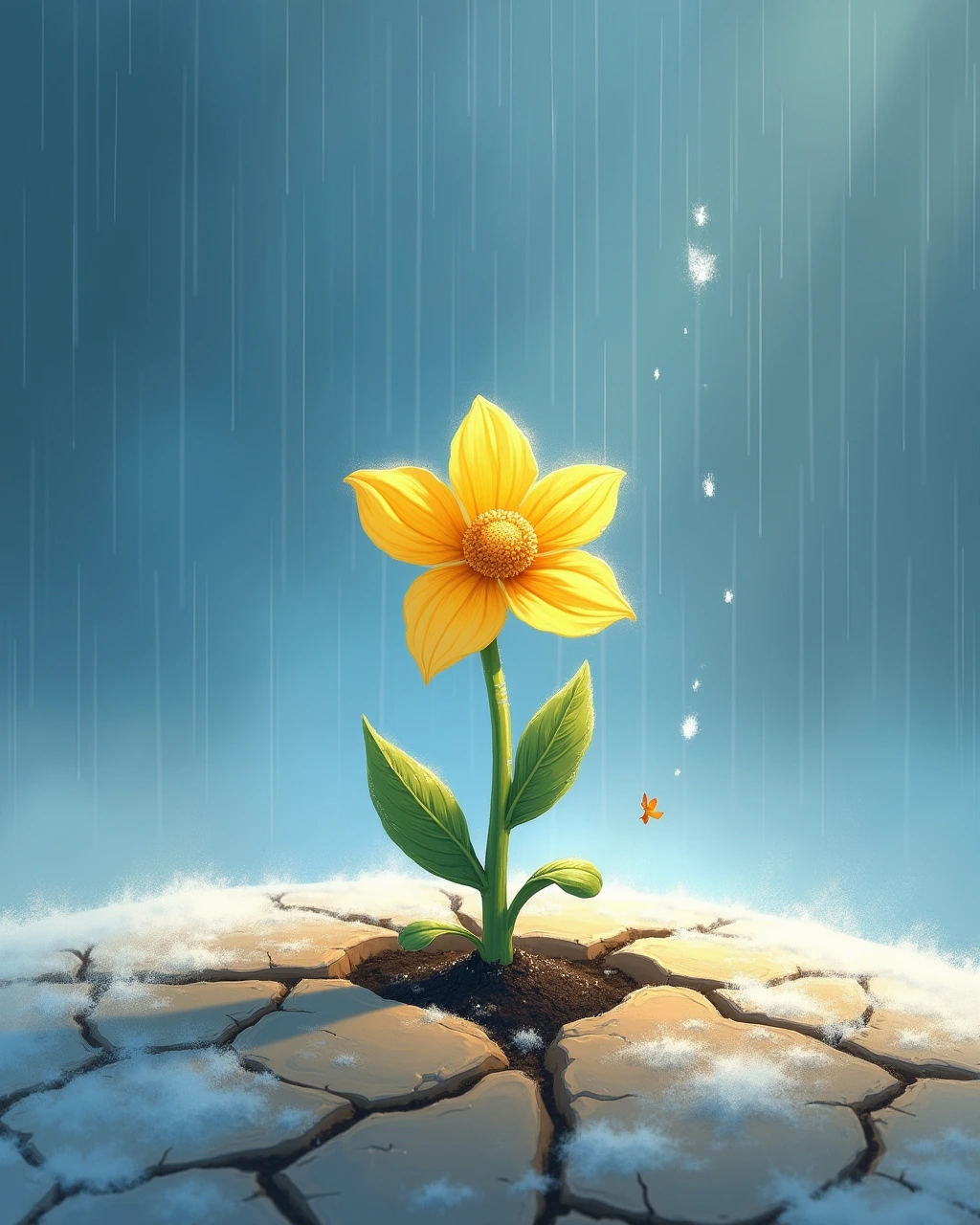
There lived in the world a little flower. No one even knew it existed on earth. It grew alone on a wasteland; cows and goats did not go there, and the children from the pioneer camp never played there either. No grass grew on the wasteland, only old grey stones lay about, and between them was dry, dead clay. Only the wind wandered over the wasteland; like a sower grandfather, the wind carried seeds and sowed them everywhere — both in the black, moist earth and on the bare, stony wasteland. In the black, kind earth, flowers and grasses were born from the seeds, but in the stone and clay, the seeds died.
And once, a single seed fell from the wind, and it found shelter in a hollow between a stone and the clay. This seed languished for a long time, and then it drank its fill of dew, split open, put out fine root hairs, dug them into the stone and the clay, and began to grow.
Thus that little flower began to live in the world. There was nothing for it to feed on in the stone and the clay; the drops of rain that fell from the sky ran along the surface of the earth and did not penetrate to its root, yet the flower went on living and living and growing little by little higher. It raised its leaves against the wind, and the wind died down near the flower; from the wind, motes of dust fell onto the clay, motes the wind had brought from the black, fertile earth; and in those motes the flower found food, but the motes were dry. To moisten them, the flower watched over the dew all night and gathered it drop by drop onto its leaves. And when the leaves grew heavy with dew, the flower lowered them, and the dew fell down; it moistened the black motes of earth that the wind had brought, and it ate away at the dead clay.
By day the flower watched over the wind, and by night the dew. It labored day and night in order to live and not die. It grew its leaves large so that they could stop the wind and gather the dew. Yet it was hard for the flower to feed on nothing but the motes that had fallen from the wind, and to gather dew for them besides. But it needed life, and it overcame with patience its pain from hunger and weariness. Only once a day did the flower rejoice: when the first ray of the morning sun touched its weary leaves.
If, however, the wind stayed away from the wasteland for a long time, then things went badly for the little flower, and it no longer had the strength to live and grow.
The flower, however, did not want to live sadly; therefore, when it grew utterly sorrowful, it dozed. Still, it constantly strove to grow, even when its roots gnawed at the bare stone and the dry clay. At such times its leaves could not drink their fill of strength and become green: one vein in them was blue, another red, a third light blue or golden. This happened because the flower lacked food, and its suffering showed in the leaves in different colors. The flower itself, however, did not know this: for it was blind and could not see itself as it was.
In the middle of summer the flower opened a corolla at its top. Until then it had looked like a little blade of grass, but now it became a true flower. Its corolla was made of petals of a simple, bright color, clear and strong, like that of a star. And, like a star, it shone with a living, flickering flame, and it could be seen even in the dark of night. And when the wind came to the wasteland, it always touched the flower and carried its scent away with it.
And so it happened that one morning a girl named Dasha was walking past that wasteland. She lived with her friends in the pioneer camp, but this morning she had woken up and grown homesick for her mother. She had written her mother a letter and was carrying the letter to the station so that it would arrive sooner. On the way, Dasha kissed the envelope with the letter and envied it, because it would see her mother sooner than she would.
At the edge of the wasteland, Dasha caught a fragrance. She looked around. There were no flowers nearby; along the path grew only a little blade of grass, and the wasteland was completely bare; but the wind was coming from the wasteland and bringing from there a quiet scent, like the calling voice of a small, unknown life. Dasha remembered a tale her mother had told her long ago. Her mother had spoken of a flower that was always grieving for its mother — a rose — but it could not weep, and its grief passed only in fragrance.
"Perhaps that flower is missing its mother there, just as I am," thought Dasha.
She went into the wasteland and saw that little flower by a stone. Dasha had never seen such a flower before — not in a field, not in a forest, not in a picture in a book, not in a botanical garden, nowhere. She sat down on the ground beside the flower and asked it:
"Why are you like this?"