
 Verified text
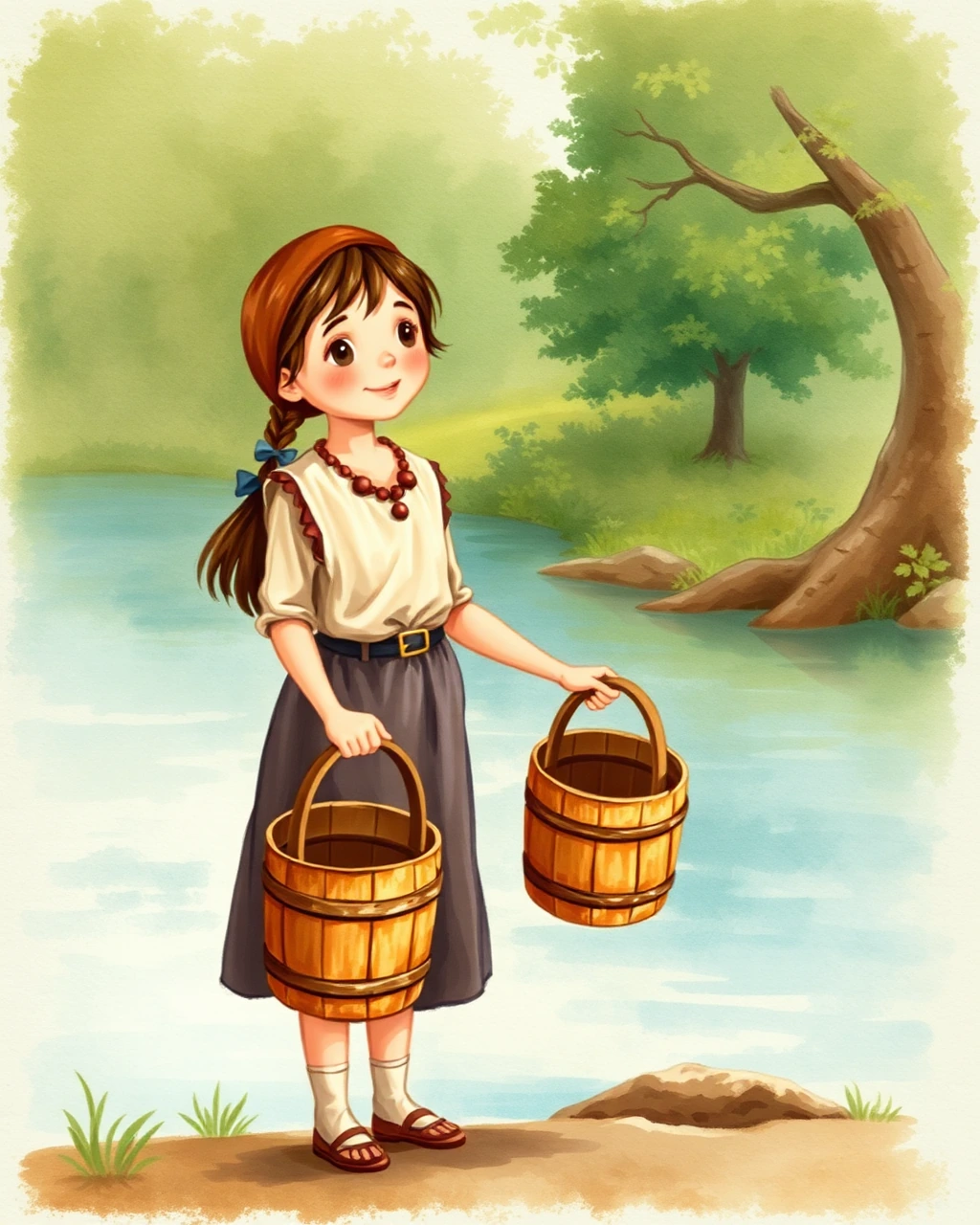
In a certain village there lived a well-to-do peasant who had one daughter who was not yet married. She once went to the river on household errands with buckets for water, where she was met by a young man who, coming level with her, looked at her with an expression that showed some sort of pity for her. The peasant girl, noticing this and being curious by nature, begged him persistently to tell her what he had seen in her face that was worthy of pity. The young man, letting out a mournful sigh and as if not wishing to reveal it, said to her: "Ah! If only you knew, dearest maiden, how much you are worthy of pity and what a specter of great sorrow threatens you, visible on your face. It shows that as soon as you are given in marriage, you will bear a son, after which your husband will leave you, and your son will die." The simple-hearted girl, hearing this, believed this fortune-teller and began to weep inconsolably, and coming home, she told her father and mother the predictions she had heard from the young man, and they, believing it too, all three together began to shed inconsolable tears.
During this mournful event in their house, their son was out in the fields and, returning, came upon this sad spectacle. Amazed, he asked his parents the reason for their inconsolable weeping. To which they all cried out to him in unison, one trying to outdo the other: "Ah, our dear son! You do not yet know that our daughter, your sister, was born unfortunate, and her chief misfortune is that as soon as she marries, she will bear a son, after which her husband will leave her, and the son will die." The peasant's son, having heard all this from them, said: "Good heavens! How thoughtless you are. Your daughter is not yet married and has borne no son, and you are already weeping. I will leave this mournful gathering and leave you alone. But I declare to you besides, if I find in the world people even more thoughtless than you, I will return to you, but if I do not find any, you will never see me before you again." — "Ah, my son!" cried the father. "How can we not weep when our heart forebodes that our daughter is unfortunate, and you increase our sorrow still more and leave us alone to feel that misfortune even more keenly." — "I assure you," replied the brother of the simple-hearted girl, "that you will in no way change my intention, but rather you drive me to carry it out all the sooner." Having said this, he took leave of his parents and set out safely from the village, resolved to find people more thoughtless than his parents.
The peasant's son, having left his family, came that very same day to a village belonging to a certain gentleman who was a passionate lover of hunting wild beasts. The peasant's son saw a large Chudskaya sow come out of the gentleman's yard. He immediately devised a clever ruse for his own benefit and began bowing very low to the sow. The lady, who was then sitting by the window, seeing a peasant bowing to her sow, opened it and asked: "Passerby, why do you bow to this beast?" — "Most gracious lady," replied the peasant's son with feigned timidity, "this sow is my mother's sister, and my own aunt. But as we have a small holiday in our village today, I have come to invite her to my parents' for a feast." The lady was so thoughtless that she ordered the sow to be given to the peasant. The peasant, to reassure the lady still further, began bowing to the sow a second time and inviting her to the dinner table. However, seeing that she resisted his wish, he said to the lady: "Gracious lady! She does not want to walk." — "Well then, take a horse from me," replied the lady, "one you would not be ashamed to be seen with in your village, riding with her." All the servants, seeing the thoughtlessness of their lady, added to this all possible alacrity: putting the sow into the cart, they ordered the peasant to drive quickly, so that their master would not meet him on the way. The peasant, having come to the forest, put the horse aside, and himself, running out onto the road, paced back and forth. But let us leave this peasant and turn to the gentleman, who had already returned from the hunt.
No sooner had our peasant driven out of the village than the husband of the woman who had given him the sow arrived. He, being very angry on this occasion, having spent his hunt unsuccessfully and having had not the least pleasure, shouted and scolded all his huntsmen. But his wife, wishing to cheer him up, resolved to inform him of this wonderful occurrence. "Listen, my dear, to what I will tell you. A certain peasant came to our sow and announced to me that he had come to invite her to his feast, for he was her own nephew. I did not contradict his request, ordered a horse to be harnessed and the sow to be put on the cart. And so I sent my sow to visit him." — "Ah, you fool!" cried the hot-tempered gentleman. "How can a man be a nephew to a sow?! But at least do you know which road this swindler took?" His wife showed it to him with great fear, and he, without the least delay, ordered the swiftest horse to be saddled, and mounting it, put a whip on his arm and set off galloping after the peasant.
He soon arrived at the forest in which the nephew of the master's sow was pacing back and forth, and as soon as he saw him, he asked whether he had seen a peasant carrying a sow on a cart. "I have seen him, sir," he replied. "But where did he go?" — "You will not catch him, sir," said the peasant, scratching his head, "unless you give me your caftan, horse, and whip, then perhaps, having overtaken the peasant, I will return the sow." The gentleman agreed to this with great willingness, and the peasant, leaving him in his waistcoat alone and taking him by the arm, began to whip him with his whip, saying at every stroke that he should not chase after peasants in future. The gentleman swore in every way that he would not chase after them in future, but the peasant did not stop whipping him with his whip until the gentleman fell to the ground. And thus our peasant returned home with two horses and the sow, while the gentleman returned with a striped back.