
 Verified text
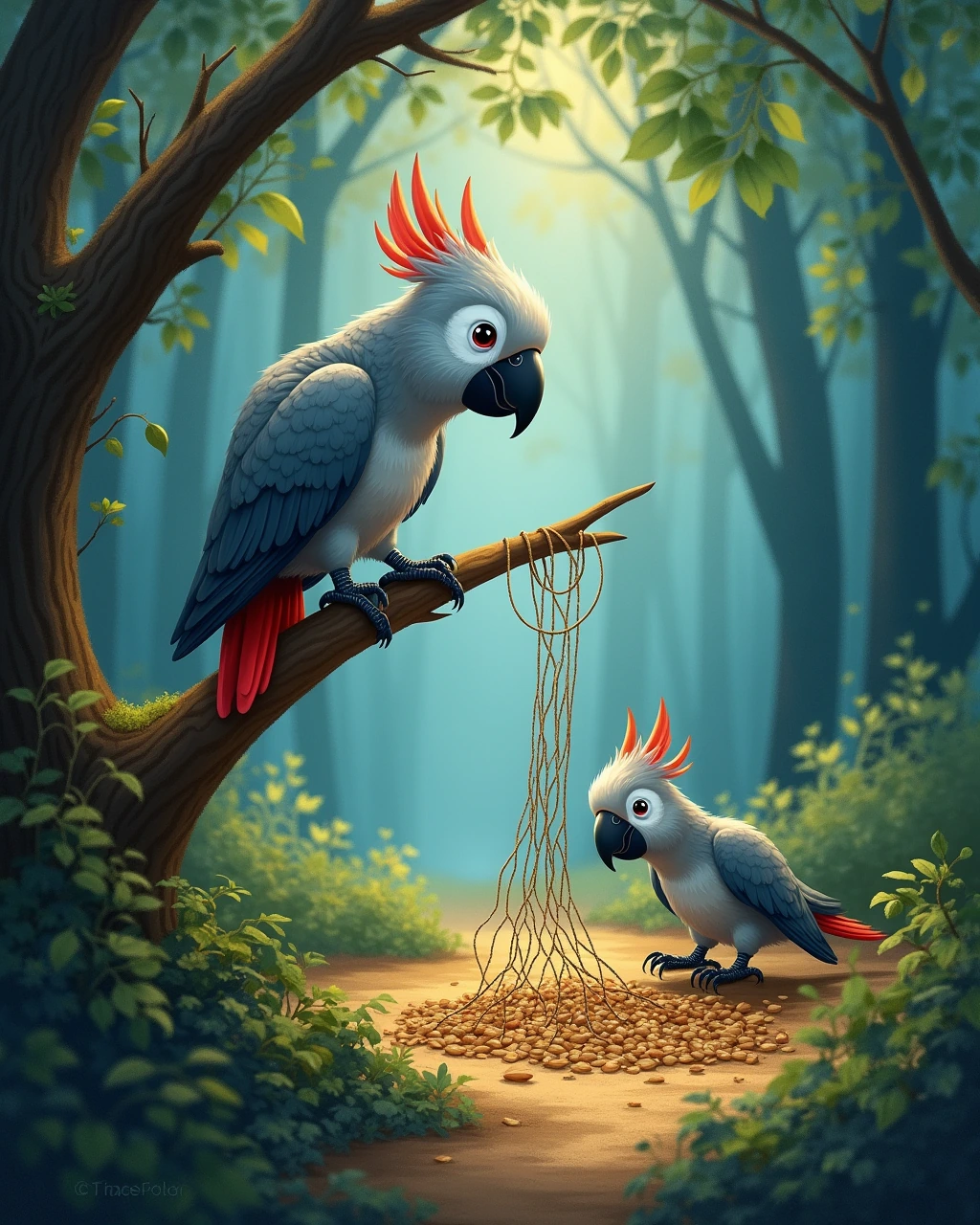
The parrot was beautiful, gray. Gray as gray pearl, and his breast white as white satin. He lived there with his wife and children in a forest by the sea. What a beautiful forest it was, what a beautiful sea! Especially when the sun was setting. Then everything truly burned: the sky, the clouds, the sea, the distant shores. And then, when the sun sank into the sea, it grew dark at once, very dark, and neither the sea nor the shores could be seen any longer. The sky grew dark, and only the stars, big bright stars, shone up above and seemed to listen to the sea roaring below. Sometimes some parrot would wake up in its tree and begin to cry out. And then all the parrots woke up and cried out too. But morning came again, it grew light again, and everyone felt cheerful at once. The parrots cried out again, but now out of joy. They and their children leapt about the trees and flapped their wings for joy. Once a hunter came into the forest, spread out nets, scattered grain, and hid. The parrots watched at first, then flew down to the ground and began to peck at the grain. But when they wanted to fly back up into the trees, they could no longer, because they had become entangled in the nets. And the more they struggled, the more entangled they became. The hunter came and carried them off. The poor parrots that were carried off cried out, and so did those left in the forest. The beautiful parrot was caught too. And his children, their mother, cried out as though they were weeping. They saw him off to the very edge of the forest, leaping from branch to branch, from tree to tree. And the beautiful parrot sat in the cage and cried out too, gazing sadly, as though he were saying: "Farewell, dear children, farewell, wife. Never, never shall I see you again." The hunter brought the parrots home, put them in separate cages, taught them to speak, and then sold them. The beautiful parrot was bought by a mother who had three children, all girls. The eldest was called Toto, the middle one Nika, the youngest May. Everyone loved the parrot very much. He sat in a large cage—in winter in the dining room, in summer on the terrace at the dacha. The parrot sat on the terrace, looking at the sea, at the rocks, at the trees, and thinking about something. Now he would talk, now whistle, now even sing. He knew many words and phrases and often said entirely new ones. He knew all the children's names and, just like their mother, would suddenly cry out: "Toto!" Toto would then come running from the garden, looking for Mother, but Mother was not there. Only the parrot sat there, looking at Toto, tilting his little head first one way and then the other, and asking: "Who are you?" "Oh, you, you little parrot, you're always tricking me," Toto would say, and run back into the garden. And the little parrot would stretch out his neck and listen, and then begin to whistle or sing. Once a new workman was hired. He was walking through the garden, and the little parrot called to him from the terrace: "Who are you?" The workman said: "A workman! Why?" The parrot loved cherries, grapes, and sunflower seeds very much, and when Mayka brought him berries in her pinafore, he would stretch out his neck and ask: "What are you carrying?" Whoever scratched the parrot's little head, he loved; but whoever teased him, he did not love—when he saw that person, he would raise his feathers, want to peck, and stop talking and singing until that person went away. Most of all he loved little May. She brought him all sorts of treats and said: "Eat, little parrot, and I'll tell you about your children." The little parrot ate and listened, while little May said: "Your children, little parrot, are healthy and miss you very much. They'll send you a letter soon, and when I grow up, I'll take you to your children. How surprised they'll be at how clever you've become, how much you can already say." The little parrot could say a great deal. Nika was often capricious, and when she started crying, she would go on crying for three hours. When she had stopped completely, Mother would ask her: "Have you stopped crying, little Nika?" "No, Mama," little Nika would answer, "I'm only resting; I'll start again in a minute." Well, once, when little Nika was resting like that, the parrot suddenly said: "Have you stopped crying, little Nika?" Even little Nika laughed. Whenever she wanted to cry, she would remember the parrot and only laugh. And Toto said: "That's how clever our little parrot is: no one could break Nika of crying, but the little parrot did." Little Nika was both the most capricious and the greatest little rascal. She always ran very fast and fell. Mother would call out to her: "Nika, you'll fall again." And Nika, right at the moment she was falling, would cry out: "No, Mama, I won't fall." Once, when there was no one on the terrace except the little parrot, Nika climbed onto a chair, and from there she wanted to climb onto the railing. And she would certainly have fallen; since the balcony was high, she might well have broken her little arm or leg. Suddenly the parrot, just like Mother, cried out: "Nika, you'll fall!" Nika was frightened and jumped down from the chair. And the parrot began to laugh: "Ha-ha-ha." Nika saw that it was the parrot who had frightened her, and scolded him: "Naughty little parrot, why did you frighten me?" And Mother gave the little parrot some sugar and said: "Good little parrot, dear little parrot, you're cleverer than my Nika." And when the little parrot grew bored and there was no one near him, he would cry out: "Who's here, who's there?" And all the children would run to him and cry out: "Little parrot, parrot, we're here." And he would mimic them: "Lit-tle par-rot." Once Toto came up to him and said: "Little parrot, dear, the boring winter is over, and soon we'll go to the dacha again." But the little parrot was sad. "Little parrot, what's the matter with you?" the children asked. They moved to the dacha. The little parrot cheered up for a moment, but then grew sad again, hardly spoke at all, listened, looked, lowered his little head, and was silent. Before, he had been so sleek and silky, but now his little feathers stuck out in all directions, and he often shuddered... He began to eat very little. Once Mayka came to him and said: "Little parrot, dear, you must be missing your children. Shall I open the cage, and you can fly to them?" Suddenly the little parrot flapped his wings. "He wants to," said little May, and opened the cage. The little parrot came out of the cage, flapped his wings, and flew. But he could no longer fly and fell into the bushes. He began to cry out piteously there: "Who's here, who's there?" "Little parrot, little parrot!" cried the children, running up. But he burrowed still deeper into the bushes and cried out still more piteously: "Who's here, who's here?" When they caught him and put him back in the cage, he closed his little eyes and fell silent. "He must be thinking about his children," said little May. And the little parrot slept and kept shuddering in his sleep. Ah, he dreamed that he was still flying far, far away to his homeland, to his wife and children. And now he was in his homeland. What a beautiful morning, mist rising over the sea, little birds waking in the forest, and he can already see his old friends. He hurries; he has so much to tell them. "Ah, listen, all of you, listen to my bitter story, tears will flow from your eyes of their own accord. For I shall tell you of my lost youth, of the long years of my captivity, of my longing, of my grief..." And all night long the poor little parrot struggled and shuddered. And the next morning, when the children woke up and came out onto the terrace to drink their milk, the little parrot was already lying dead in his cage.
Literary tale
The Parrot
The parrot was beautiful, gray. Gray as gray pearl, and his breast white as white satin. He lived there with his wife and children in a forest by the sea. What a beautiful forest it was, what a beautiful sea!
This text was translated with a language model. The source is listed below.