
Literary tale

Happy Misfortune

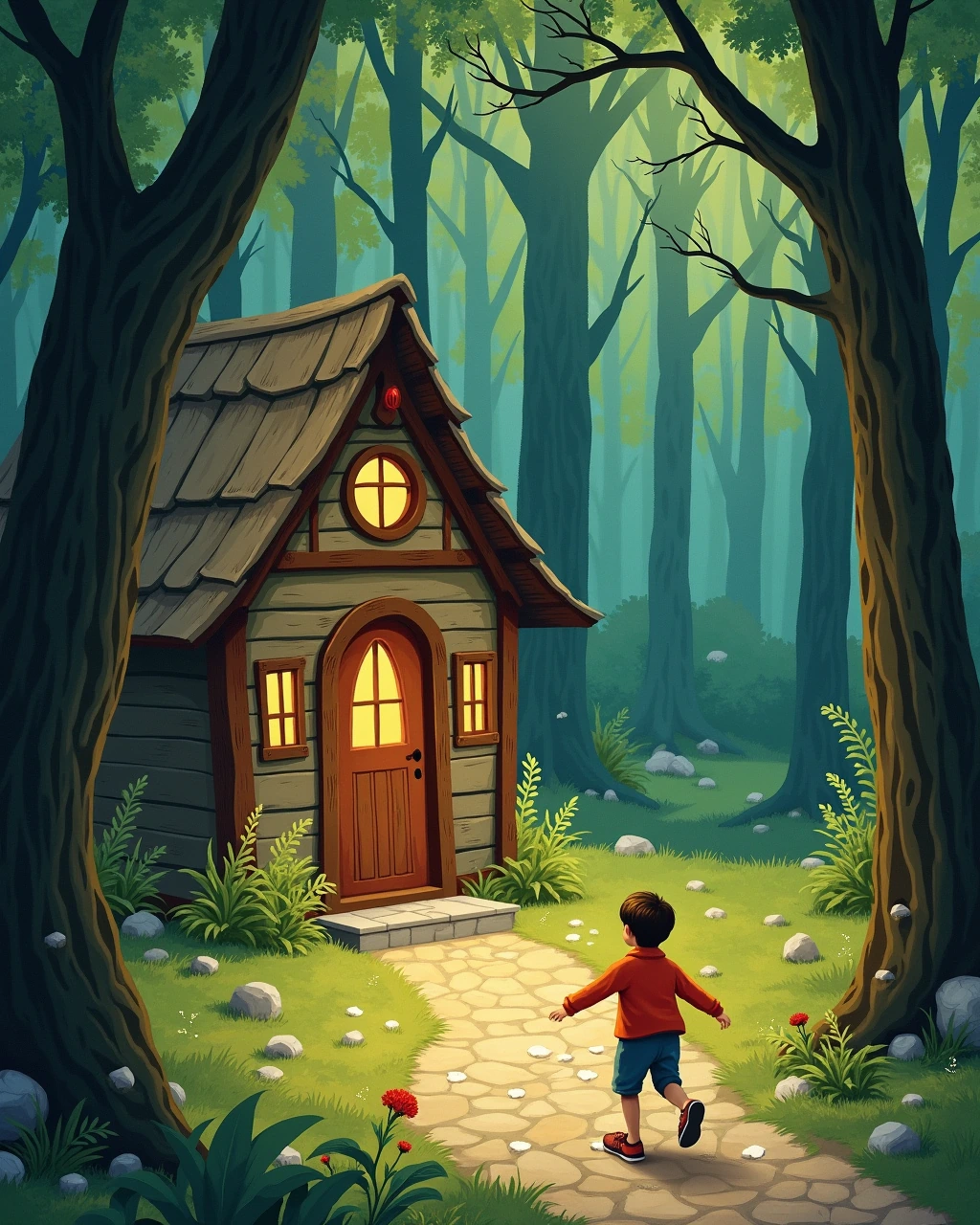
In a small house situated in the midst of a dense forest lived a poor woodcutter with his wife. They had two children — a boy and a girl. The first was called Stepa, and the second Natasha.

This text was translated with a language model. The source is listed below.
PDF

Happy Misfortune

In a small house situated in the midst of a dense forest lived a poor woodcutter with his wife. They had two children — a boy and a girl. The first was called Stepa, and the second Natasha.

"You know what?" said the woodcutter's wife, who was a stepmother to the children, one day. "Tomorrow morning we'll take Stepa and Natasha into the forest and leave them there. Really, I have nothing more to feed them with; such poverty has come upon us that it's frightening to think of!"

The woodcutter began to object, since he pitied his own flesh and blood, but the wicked stepmother would not listen to anything and, in the end, nevertheless persuaded him to do as she wished.

Not a single word of their parents' conversation escaped Stepa and Natasha. Natasha covered her face with her hands and wept.

"Stop!" Stepa comforted her. "I'll arrange things so that we return home right away..."

As soon as the old folks fell asleep, the boy went outside, filled his pockets with little white pebbles, then returned to the hut, lay down in bed, and fell into a deep sleep.

The next morning the stepmother woke the children earlier than usual, gave them each a piece of bread, and led them into the forest, not noticing that the clever Stepa was walking along dropping a pebble after a pebble behind him. Thus they reached the very middle of the forest.

"My dear children, I'll make a fire here, and you sit near it and warm yourselves. Your mother and I will return," their father said to them.

The children obeyed. After a snack of the black bread they had brought with them, they fell sweetly asleep, while the old man and old woman, stepping over stumps and hummocks, hurried homeward.

"Thank God! We've rid ourselves of two extra mouths to feed!" said the old woman, entering her hut.

Meanwhile the children woke up. Seeing themselves alone in the dense forest on such a dark night that objects could not be distinguished two steps away, Natasha burst into bitter tears, but Stepa comforted her a second time. Waiting for the moment when the moon, appearing from behind the clouds, lit up all the surrounding space, he took the girl by the hand and, following the pebbles scattered earlier, safely returned home.

The wicked stepmother, who opened the door for them, flew into a rage, heaped a whole torrent of abuse upon the poor children, and took her husband's solemn word that the next day he would take the children into the forest again, but this time to such an impenetrable place from which they could in no way extricate themselves.

Fortunately, Stepa heard the terrible plot this time as well, after which he set about devising a new means of saving his sister and himself from the impending doom.

He could not go out and gather pebbles, because the wicked stepmother had locked the door and put the key under the pillow; the poor fellow absolutely did not know what to decide upon, and seeing no other way out, while following his sister and parents into the forest, he dropped pieces of the bread he had received for breakfast on the ground instead of pebbles.

"Don't be afraid, everything will be all right," he comforted little Natasha when they were once again left alone in the dark forest.

But, alas! This time it turned out far from all right, for the birds flying through the forest instantly pecked up the bread scattered on the grass, and our poor children, having run in vain all day, at last saw with horror that they were lost.

Gathering their last strength, the unfortunate little ones, however, kept moving until at last they noticed a tiny hut whose roof was made of gingerbread, walls of biscuit, and windows of sugar.

The children rejoiced at such a find and immediately began to feast; but suddenly the door of the hut swung open and an old woman appeared on the threshold.

"You are welcome, come to me, you will be comfortable and merry with me!" the old woman began in a gentle voice.

The children smiled trustingly and followed her into the hut, not suspecting that the old woman had only pretended to be kind, and was in reality the wickedest of all wicked witches, who had lured them to her in order to boil them in hot water and eat them.

Noticing that the children were very hungry, she first of all fed them supper, gave them tea, and put them to bed. The next morning, as soon as the sun rose, the old woman appeared again in the children's room and, hastily seizing Stepa by the hand, dragged him off and locked him in a dark little closet; then, returning to Natasha's little bed, she ordered her to get up at once and go for water to fill the cauldron in which Stepa was to be boiled. Hearing this news, Natasha with tears began to beg the witch to spare her little brother, but the witch would not listen to anything, continuing to fatten the boy in the dark closet so that he would grow fat and his flesh would become tastier. Finally, she announced to Natasha that tomorrow she would kill Stepa and make broth from him. Natasha burst into tears, fell on her knees before the witch, again begging her for mercy, but the witch would not hear anything.

"Climb into the oven and see if it's hot enough," said the witch when the critical moment arrived.

Natasha guessed that the witch was sending her into the oven in order to slam the damper shut afterwards and roast her, and therefore hastened to excuse herself by saying she was too small to climb up there.

"Nonsense," replied the witch. "It's not nearly as difficult as it seems to you!" and, wishing to show Natasha how one should climb, she instantly scrambled right into the hearth. Then Natasha, without thinking twice, slammed the damper shut and ran straight to the little closet to let Stepa out.

"The witch is no more, she has burned up!" the girl cried joyfully, throwing herself into her dear brother's arms. "Let's run out of this terrible dwelling."

"Yes, yes!" Stepa responded, and then, seeing in one corner of the closet a large chest filled with silver, gold, and precious stones, hastily began transferring all of it into his own pockets.

"Now let's hurry on our way," he continued, grabbing his little sister by the hand and rushing out of the hut into the forest, from which, after the shortest time, they reached their parents' home, where they found their father in deep grief. It turned out that the wicked stepmother had died and that the old man, repenting of his cruel deed toward the children, could find no rest from pangs of conscience.

Seeing them alive and well, he was extremely glad. There was no end to questions, inquiries, and conversations. Then, when the first bursts of joy had somewhat subsided, Stepa scattered on the floor the treasures he had brought with him, at the sight of which the woodcutter only threw up his hands and whispered:

"Now we shall live peacefully, without any worry about our daily bread!"