
 Verified text
My dear reader, do not run through these poems in succession: you will probably get bored — and the book will fall from your hands. But read them piecemeal: one today, another tomorrow, — and perhaps one of them will drop something into your soul.
The last day of June; for a thousand versts around, Russia — the native land.
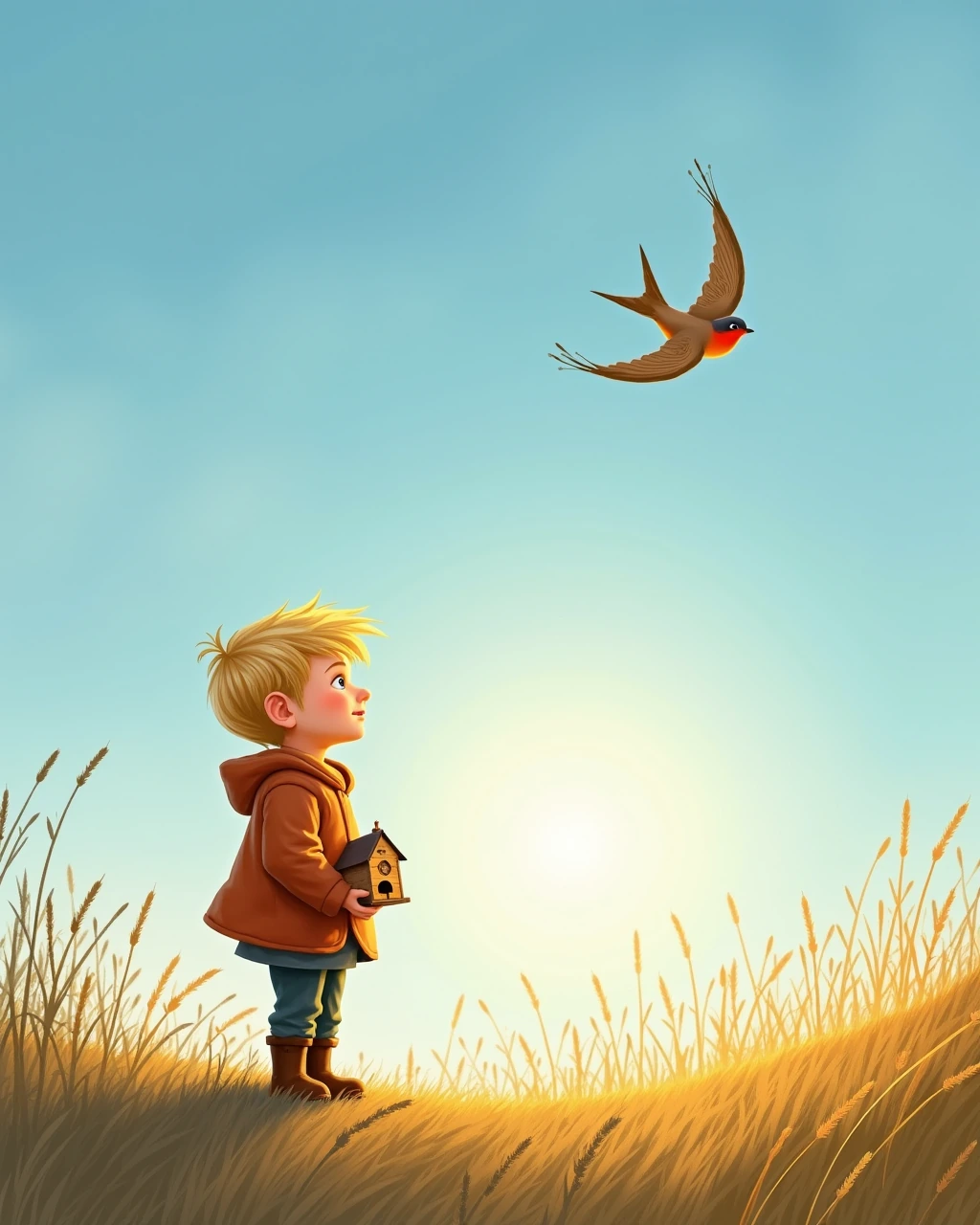
The whole sky is flooded with even blue; only one little cloud on it — now drifting, now melting. Calm, warmth... the air is like fresh milk!
Larks are ringing; pot-bellied pigeons are cooing; swallows wheel silently; horses snort and chew; dogs do not bark and stand, meekly wagging their tails.
There is a smell of smoke, and of grass — and a little of tar — and a little of leather. The hemp fields have already grown strong and give off their heavy but pleasant scent.
A deep but gentle ravine. On the sides, in several rows, big-headed willows split at the bottom. A stream runs along the ravine; at its bottom small pebbles seem to tremble through the light ripples. In the distance, at the edge of the earth and sky — a bluish line of a great river.
Along the ravine — on one side neat little barns, small huts with tightly closed doors; on the other side five or six pine log houses with shingle roofs. Above each roof a tall pole of a starling box; above each porch a carved iron curly-maned horse. The uneven window panes gleam with rainbow colors. Jugs with bouquets are painted on the shutters. In front of each hut stands properly a sound bench; on the earthen banks cats are curled up in balls, pricking up their translucent ears; behind the high thresholds the cool entryways darken.
I lie at the very edge of the ravine on a spread rug; around me whole heaps of freshly mown, overpoweringly fragrant hay. Clever hosts have scattered the hay in front of the huts: let it dry a little more in the hot sun, and then into the barn! How glorious it will be to sleep on it!
Curly children's heads stick out of every heap; crested hens are looking for midges and bugs in the hay; a white-lipped puppy is floundering in the tangled blades.
Russet-haired lads, in clean shirts girded low, in heavy boots with trim, exchange lively words, leaning with their chests on the unhitched cart, — they jest.
From the window peeks a round-faced young woman; she laughs either at their words or at the children's frolicking in the piled hay.
Another young woman with strong arms is pulling a large wet bucket from the well... The bucket trembles and sways on the rope, dropping long fiery drops.