
 Verified text
There lived two brothers. One was poor, and the other rich. The poor brother ran out of firewood. There was nothing to heat the stove with. It was cold in the hut. He went to the forest, chopped firewood, but had no horse. How was he to bring the firewood home? — I'll go to my brother and ask for a horse. His rich brother gave him an unkind welcome. — Take the horse, but mind you don't load too big a cart, and don't count on me in future: give today and give tomorrow, and then you'll go begging yourself. The poor man led the horse home and remembered: — Oh, I don't have a collar! I didn't ask right away, and now there's no point going — my brother won't give it. Somehow he tied the sled firmly to his brother's horse's tail and set off. On the way back the sled caught on a stump, but the poor man didn't notice and whipped the horse. The horse was hot-tempered, bolted, and tore off its tail. When the rich brother saw that the horse had no tail, he cursed and shouted: — You've ruined the horse! I won't let this go! And he sued the poor man. Whether much or little time passed, the brothers were summoned to the city for the trial. They walk and walk. The poor man thinks: I've never been to court, but I've heard the saying: the weak should not fight the strong, nor the poor sue the rich. They'll condemn me. They were just crossing a bridge. There were no railings. The poor man slipped and fell off the bridge. And at that moment below, a merchant was driving over the ice, taking his old father to the doctor. The poor man fell straight into the sled and struck the old man dead, but he himself remained alive and unharmed. The merchant grabbed the poor man: — Let's go to the judge! And the three of them went to the city: the poor man, the rich brother, and the merchant. The poor man became quite downcast: Now they'll surely condemn me. Then he saw a heavy stone on the road. He grabbed the stone, wrapped it in a rag, and tucked it into his bosom: Seven troubles, one answer: if the judge rules against me and condemns me, I'll kill the judge too. They came to the judge. A new matter was added to the old case. The judge began to try the case and question them. And the poor brother would look at the judge, take the stone in the rag from his bosom, and whisper to the judge: — Judge, judge, but keep looking here. So once, and twice, and a third time. The judge saw and thinks: Surely the peasant is showing gold? He looked again — a big bribe. If it's silver too, there's a lot of money. And he ruled that the tailless horse be kept by the poor brother until the horse's tail grows back. And he said to the merchant: — For the fact that this man killed your father, let him stand on the ice under that same bridge, and you ride down on him from the bridge and crush him to death, just as he crushed your father. With that the trial ended. The rich brother says: — Well, all right, so be it, I'll take the tailless horse from you. — What are you saying, brother, — the poor man replies. — Let it be as the judge ruled: I'll keep your horse until the tail grows back. The rich brother began to persuade him: — I'll give you thirty rubles, just give me the horse. — Well, all right, give me the money. The rich brother counted out thirty rubles, and with that they made their peace. Then the merchant began to beg: — Listen, peasant, I forgive you your guilt, you can't bring back a parent anyway. — No, let's go, since the court ruled it, ride down on me from the bridge. — I don't want your death, make peace with me, and I'll give you a hundred rubles, — begs the merchant. The poor man received a hundred rubles from the merchant. And just as he was about to leave, the judge calls to him: — Well, now give me what was promised. The poor man took the bundle from his bosom, unwrapped the rag, and showed the judge the stone. — This is what I was showing you and saying: Judge, judge, but keep looking here. If you had condemned me, I would have killed you. — Good thing, — thinks the judge, — that I ruled in this peasant's favor, or I wouldn't be alive. And the poor man went home cheerful, singing songs.
Folk tale
Shemyaka's Court
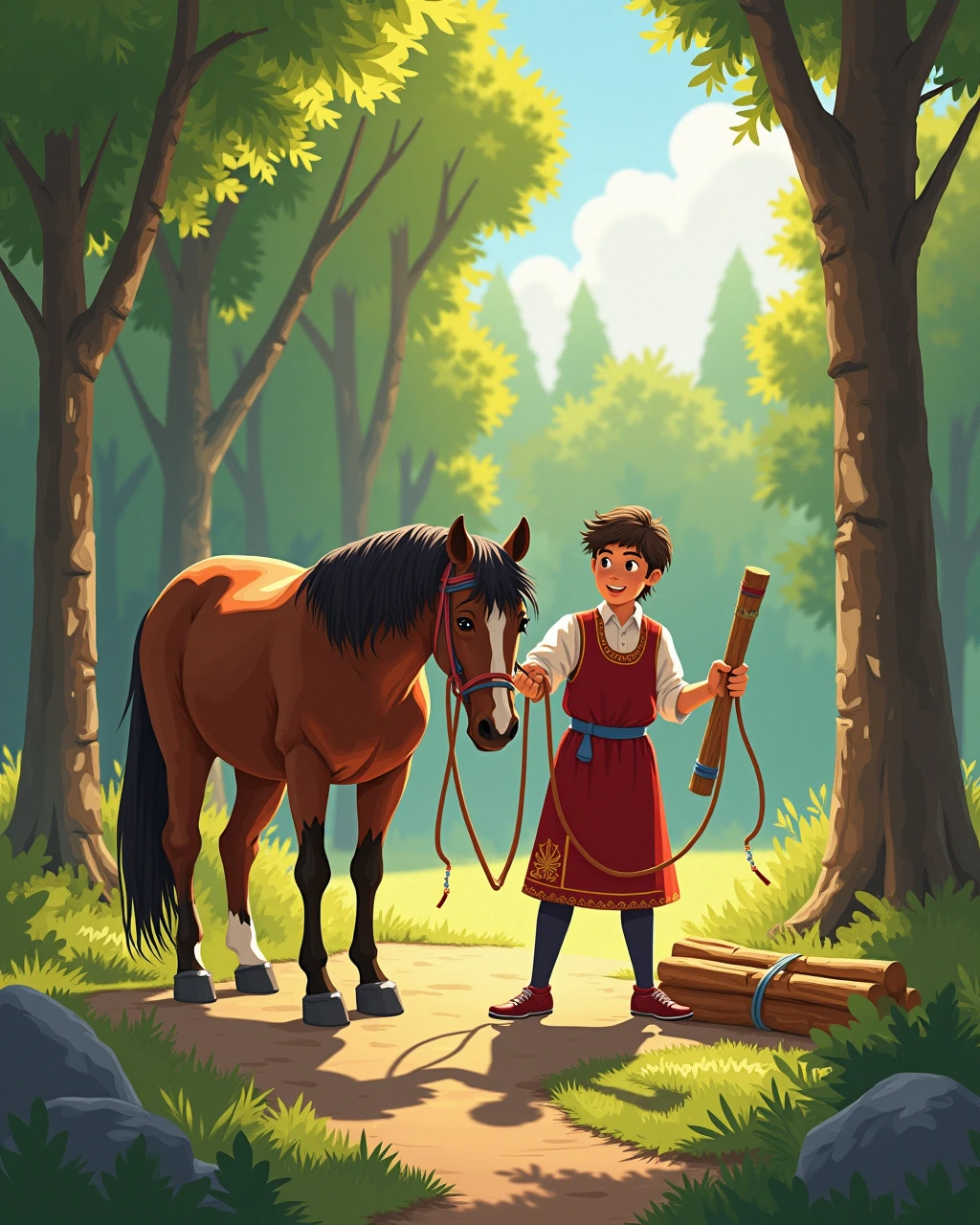
There lived two brothers. One was poor, and the other rich. The poor brother ran out of firewood. There was nothing to heat the stove with. It was cold in the hut. He went to the forest, chopped firewood, but had no horse.
This text was translated with a language model. The source is listed below.