
Literary tale

Volga Svyatoslavich

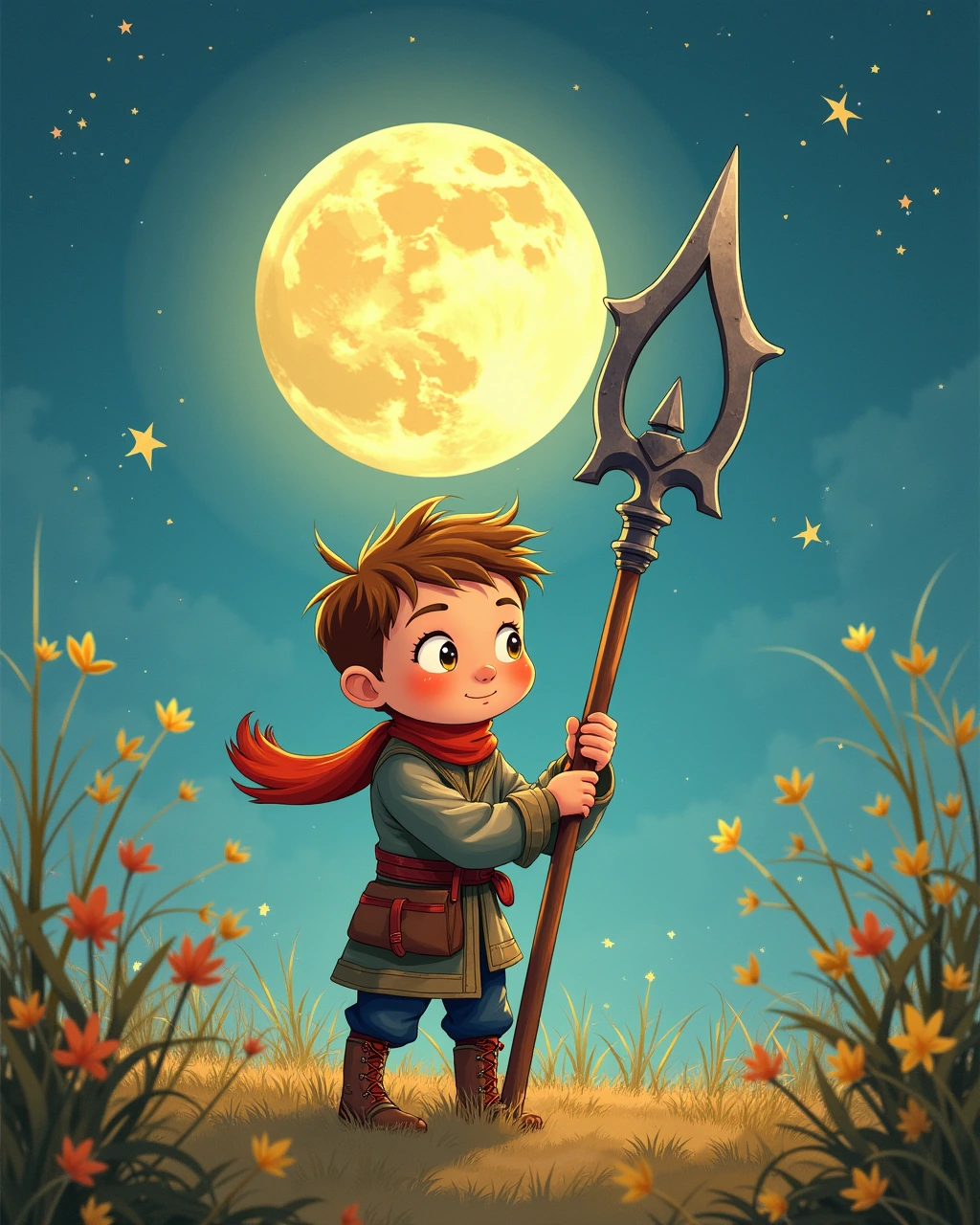
The red sun set beyond the blue seas, beyond the high mountains; a bright moon rose into the sky and led out after it a merry round dance of clear, frequent little stars...

This text was translated with a language model. The source is listed below.
PDF

Volga Svyatoslavich

The red sun set beyond the blue seas, beyond the high mountains; a bright moon rose into the sky and led out after it a merry round dance of clear, frequent little stars... On this night a mighty bogatyr was born in Kyiv, young Volga Svyatoslavich.

At the hour of his coming into the world, the earth trembled and the blue sea grew troubled; all the beasts scattered: deer and aurochs hid in their burrows, foxes and hares vanished into the forest thickets, wolves and bears burrowed into the fir woods, birds rose high into the heavens, fish went down into the sea depths: all sensed that a storm had come upon them: a mighty bogatyr had been born.

Volga grew not by the day but by the hour; he spoke loudly, as thunder rumbles; he spoke to his young mother Marfa Vseslavyevna such words:

— Sovereign mother! Do not swaddle me in costly swaddling clothes, do not put a silken sash on me — swaddle me in strong damask armor, put a golden helmet on my wild head, and in my hands give me a leaden club, heavy and weighty, weighing three hundred poods!

The mighty Volga grew up; at seven years of age his mother sent him to be taught; the learning stood him in good stead: he mastered all manner of lore and cunning, yet this teaching seemed too little to him. Volga went away from home into the high mountains, into the dark forests, to the old wizard-sages, and from them Volga learned various deep wisdoms: Volga learned to turn himself into a bright falcon, and a grey wolf, and a bay aurochs with golden horns.

At twelve years of age Volga began to gather a war band for himself: for three years fine young fellows came to him, coming from the south and the north, and the east, and the west: seven thousand of the band gathered, all brave and strong young fellows.

And Volga rode out with his band into the open field to win glory and riches for himself.

— My brave band! — says Volga, — twist silken cords, set snares upon the damp earth, catch martens and foxes, wild beasts and black sables.

Volga's band obeyed: they twisted cords, set snares; for three days and three nights the fine young fellows labored: only no beast would be caught, as if on purpose — the band returned to Volga empty-handed.

Then Volga turned into a mighty lion, ran into the forests, slew all manner of beasts, fed his band like a king, and dressed them in black sable furs.

A second time Volga sends out the fine young fellows:

— My brave band! twist silken cords, set snares upon the branches of trees: catch geese, swans, bright falcons, small birds!

For three days and three nights Volga's band hunted: not a single bird got tangled in the snares; they came to Volga empty-handed.

A third time Volga says:

— My brave band! Take steel axes, build a sturdy oak ship, cast silken nets into the sea, catch all manner of fish: salmon and whitefish, and pike, and little roach, and costly sturgeon.

For three days and three nights the warriors stayed at sea; they did not catch even one little fish! They did not know how to show their faces to Volga. Volga saw the matter was bad, that he would have to go after the catch himself. Here Volga turned into a pike-fish, sank to the deep sea floor, and caught all manner of fish; he fed his band sugary dainties, and every kind of changing dish. They lived and prospered, knowing no care, nor reckoning of any.

Once rumors spread through Kyiv that the Indian king was gathering for war against the glorious, capital city; he threatened to take Kyiv, to lay it waste, to give God's churches over to fire.

Sensible and shrewd was the fine young fellow Volga; he gathered his brave band and set out on campaign toward the Indian kingdom. They went a day, and another; Volga says to the band:

— Bold, fine young fellows, of you here have gathered no more and no less than seven thousand; is there among you a man who could turn into a bay aurochs and run at once into the Indian kingdom, to spy out what Tsar Salyk Stavrulevich is plotting?

Volga's band bows low to Volga, like grass bent to the earth by the wind, and says:

— We have no other such man besides you, Volga Svyatoslavich.

Here Volga turned into a bay aurochs with golden horns and ran toward the Indian kingdom: with the first leap he covered a verst, and with the second he vanished from sight altogether. Then Volga turned into a bright falcon, flew into the Indian kingdom, alighted on the casement window of the tsar's white-stone chambers, and hears how the wife of Tsar Salyk, Yelena Azvyakovna, speaks to her husband:

— You go, glorious tsar, to war against holy Rus', yet you do not know that a bright moon has risen into the sky, that a mighty bogatyr has been born in Kyiv, your strong enemy, Volga Svyatoslavich!

Then Salyk Stavrulevich grew angry at his wife for dissuading him from going to Rus' and praising a strange bogatyr; he seized the tsaritsa and dashed her with all his might against the stone floor!

They came to the stone, sturdy wall of the Indian capital city: high were the walls and strong, the iron gates were shut fast and tight, barred with copper hooks and bolts. By day and by night the tsar's guards patrol around the city. On the gates is a carved, fine lattice of subtle workmanship: only a tiny ant could slip through the patterns of the lattice, so thin and narrow are they.

Volga's band grew sorrowful:

— In vain shall we lay down our heads here: how are we to slip through these cunning walls into the Indian capital city!

Volga hears the lament of the bold, fine young fellows, and says:

— This grief can be helped!

Volga turned into an ant and turned his band into ants, and they slipped past the city walls into the glorious Indian kingdom. There they turned back into fine young fellows on horses, and armed themselves with daggers and spears. Volga gave them this command:

— Go through the Indian kingdom, cut down old and young, leave not a single villainous Tatar alive — leave alive only seven thousand fair maidens!

And Volga himself went to the tsar's chambers, to the Indian tsar. Tsar Salyk Stavrulevich sits in his sturdy palace: the iron doors are locked with heavy damask padlocks. Volga shoved the doors with his foot, and the sturdy bolts flew off: there was no need to open them. Volga saw Tsar Salyk and says:

— You are not beaten, not executed! — he seized him by his white hands, dashed him against the brick floor, and laid him out on the spot.

And Volga himself became tsar and sovereign in the Indian kingdom, took to wife the fair tsaritsa Yelena Azvyakovna, and his band married the dear, fair maidens.

Volga richly rewarded his fine young fellows: he bestowed silver and gold upon them; to each he gave a herd of a hundred thousand horses.

The brave band praises its bold prince, and throughout all Rus' resounds loud praise for the deeds and feats of the glorious bogatyr Volga Svyatoslavich and his bold, fine young fellows. 1