
 Verified text
It was the end of January; a terrible blizzard raged; snowy whirlwinds swept through the streets and alleys; snow plastered the windows of houses, fell from the roofs in clumps, and the wind kept driving the passersby along. They ran, flew headlong, until they bumped into each other's arms and stopped for a minute, holding tightly to one another. Carriages and horses were as if powdered; footmen stood on the steps with their backs to the carriages and to the wind, while pedestrians tried to stay in the lee of the carriages under their shelter, the vehicles barely dragging through the deep snow. When finally the blizzard subsided and narrow paths were cleared along the houses, passersby constantly collided and stopped before each other in expectant poses: no one wanted to be the first to step into a snowdrift, yielding the way to another. But then, as if by silent agreement, each sacrificed one leg, lowering it into the snow.
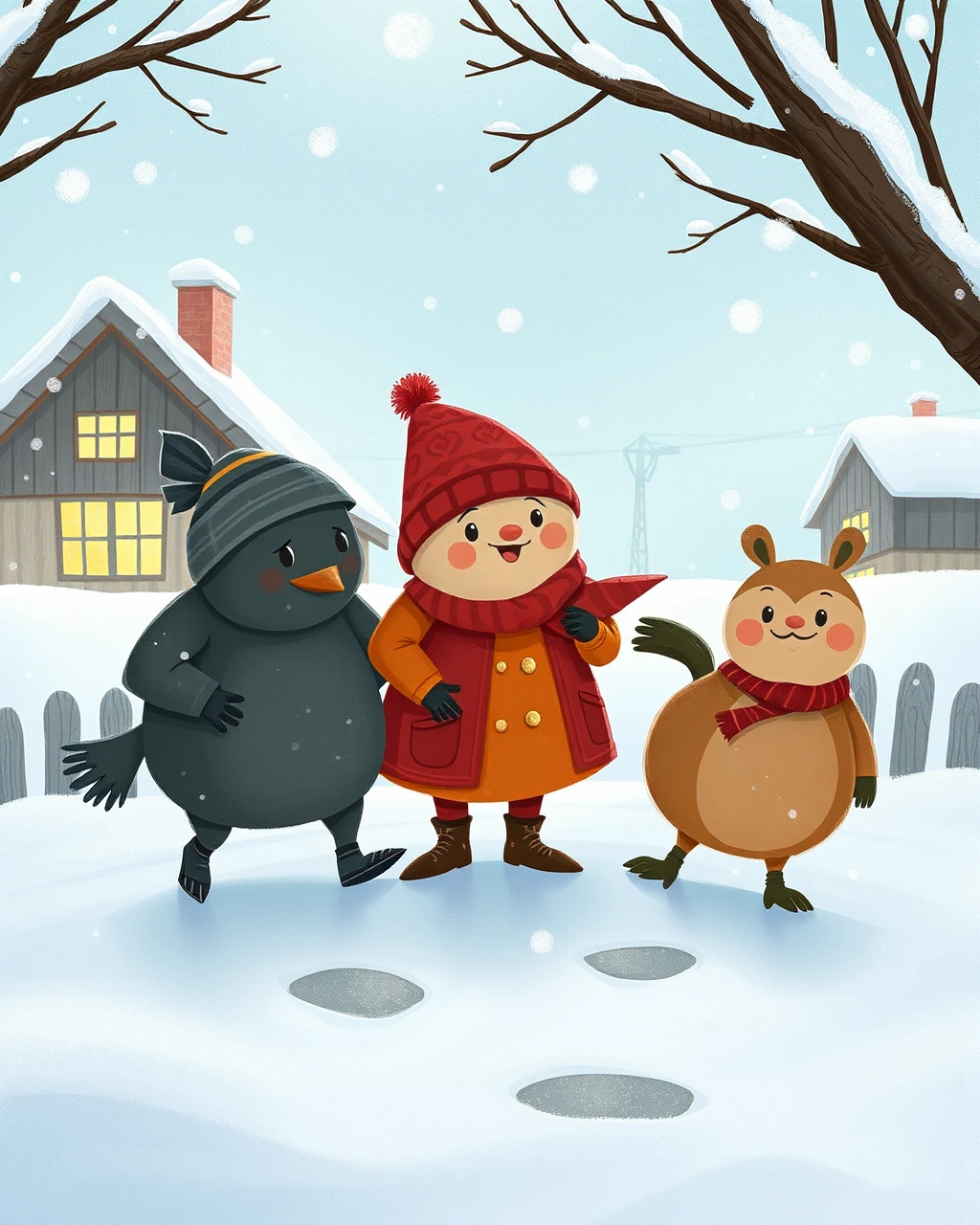
By evening the weather had completely calmed; the sky became so clear, so pure, as if it had been swept out, and even seemed somehow higher and more transparent, while the little stars, as if freshly polished, shone and sparkled with bluish lights. The frost crackled fiercely, and by morning the upper layer of snow had hardened so much that sparrows hopped upon it without sinking in. They darted from drift to drift, jumped onto the cleared paths, but neither here nor there could anything edible be found. The little sparrows were quite frozen.
"Peep!" they said among themselves. "And this is the New Year! It is worse than the old one! It was not worth changing at all! No, we are dissatisfied, and not without reason!"
"And the people, oh the people, what a noise they made welcoming the New Year!" said a little frozen sparrow. "They fired guns, smashed clay pots against doors—in short, they were beside themselves with joy—all because the old year had come to an end! I too was glad at first, thinking that now warmth would arrive; but not at all! It freezes even harder than before! People have evidently lost their wits and mixed up the seasons!"
"Indeed!" chimed in a third—an old sparrow with a gray crest. "They have such a thing—a creation of their own invention—a calendar, as they call it, and they imagine that everything in the world must proceed according to this calendar! Not at all! Spring will come, and then the New Year will begin, but not before; thus it has been ordained in nature once and for all, and I adhere to this reckoning."
"But when will spring come?" asked the other sparrows.
"It will come when the first stork arrives. But he is not particularly punctual, and it is difficult to calculate in advance exactly when he will arrive! However, if one is to find out about this at all, it should not be done here in the city—no one here knows anything properly—but in the countryside! Let us fly there to wait for spring! There it will surely arrive sooner!"
"All this is very well!" said a female sparrow who had long been fluttering about nearby and chirping but had not joined the conversation. "There is only one thing: here in the city I have grown accustomed to certain conveniences, and whether I shall find them in the country I do not know! Here there is a human family; a sensible idea occurred to them—to nail three or four empty flowerpots to the wall. Their upper rims fit tightly against the wall, while the bottoms face outward, and in each bottom there is a small hole through which I freely fly in and out. There my husband and I made our nest, and from there all our chicks flew forth. Naturally, people arranged all this for their own pleasure, to admire us; otherwise they would not have lifted a finger! They throw us bread crumbs—also for their own pleasure—but for us it is nevertheless food! Thus, to some extent we are provided for here, and I think that my husband and I will remain! We too are very dissatisfied, but still we shall stay."
"And we will fly to the country to see if spring is coming!" said the others, and they flew away.
In the village real winter prevailed, and it was perhaps even colder than in the city. A sharp wind swept over the snowy fields. A peasant in large warm mittens rode on a sledge, clapping his hands to knock the frost out of them; the whip lay on his knees, but the emaciated horses trotted along; steam poured from them. The snow squeaked under the runners, while the sparrows hopped in the sledge tracks and froze.
"Peep! When will spring come? Winter drags on something terribly long!"
"Terribly long!" echoed from a high hill covered with snow, rolling across the fields. Perhaps it was only an echo, or perhaps it was the voice of a strange old man sitting on the hill upon a pile of hay. The old man was white as moonlight—with white hair and beard—and dressed in something like a white peasant fur coat. On his pale face his large bright eyes burned intensely.