
Literary tale

The Young King

A young king, on the eve of his coronation, rejects his luxurious royal garments after dreaming of the human suffering and death required to create them, choosing instead to wear simple shepherd's clothes until a divine miracle crowns him with natural beauty, proving that true royalty stems from compassion and spiritual purity rather than material wealth.

PDF

The Young King

It was the evening before the day appointed for his coronation, and the young king remained alone in his magnificent room. All his courtiers had requested permission to withdraw, bowed to the ground according to etiquette, and departed to the great hall of the palace to receive certain final instructions from the master of ceremonies.

The sixteen-year-old king was not at all grieved by their departure. With a sigh of relief he threw himself upon the soft cushions of his embroidered bed and lay there, with an unmoving gaze and widely opened mouth, like a forest creature just captured by hunters.

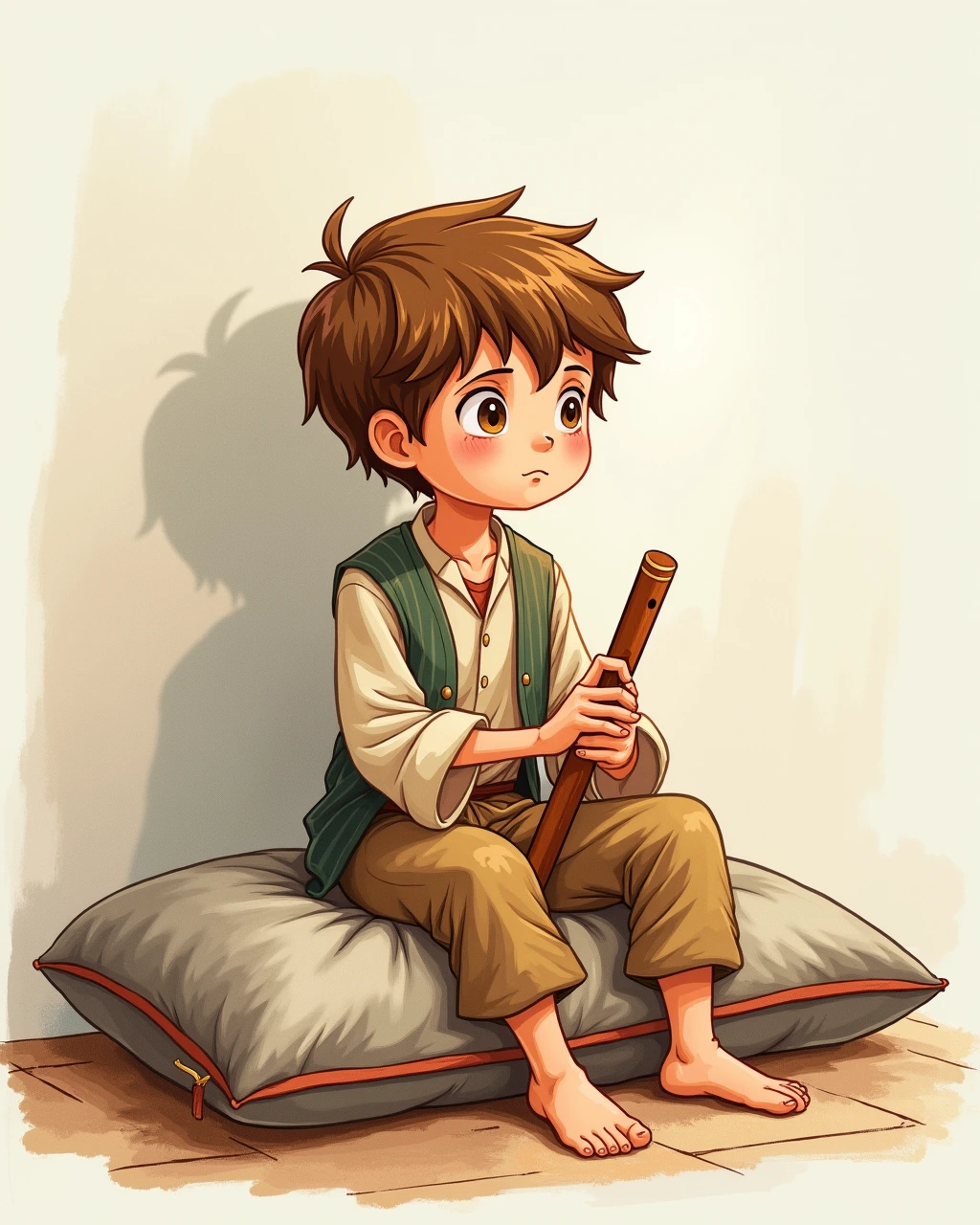
And indeed, it was hunters who had found him; they had come upon him by chance when he, half-naked, with a flute in his hand, was following the herd of goats belonging to a poor shepherd, whose son he had always believed himself to be. He was the child of the old king's only daughter, the fruit of her secret marriage with a man far beneath her in birth—a foreigner who, by the magical power of his lute, had compelled the princess to love him; according to others, he was an artist from Rimini, honored by the princess, who suddenly disappeared, leaving unfinished a work upon which he had been laboring in the cathedral. At merely eight days old, the child was taken from his mother while she slept and entrusted to the care of a peasant and his wife, who had no children of their own and lived in a remote part of the forest. Grief, as the court physician declared—or, as some supposed, a potent Italian poison administered in wine—killed the pale princess who had borne him within an hour of her awakening; at the very moment when the faithful messenger, having carried the child on the bow of his saddle, dismounted from his weary horse and knocked upon the rough door of the shepherd, the princess's body was lowered into the bottom of a pit dug in an abandoned cemetery, far beyond the city gates, into a grave where already lay, so it was said, the corpse of the young stranger, unspeakably beautiful, with his hands bound behind his back with rope and his chest covered with many wounds.

Thus, at least, they whispered secretly from ear to ear. What was certain was that the old king, on his deathbed, compelled by the reproaches of conscience to recall his guilt, or perhaps simply unwilling that the kingdom should pass into alien hands, had ordered the boy to be sought out and, in the presence of the council, acknowledged him as his heir.

And it seemed that from the very moment of this acknowledgment the boy displayed signs of that strange attraction to beauty which was destined to exert such enormous influence over his entire life. Those who accompanied him through the chambers assigned to him often spoke of the exclamations that burst from his lips when he beheld the beautiful garments and rich jewels prepared for him, and of the joy, almost wild, with which he cast off his coarse leather shirt and his heavy cloak of sheepskin. Sometimes, of course, he missed the beautiful, free life of the forest, and the tedious court ceremonial, occupying so many hours each day, irritated him. But the wonderful palace—Joy was its name, of which he was now master—seemed to him a new world of pleasures created for him, and as soon as he could escape from the council or the audience hall, he would rush down the great staircase with its gilded bronze lions and sparkling porphyry steps and wander from hall to hall, from corridor to corridor, as though seeking in the contemplation of beautiful things a remedy for his sorrows, a consolation for his recovery.

On these journeys, as he called his walks through the palace—indeed, they were for him true journeys in a land of wonders—he was sometimes accompanied by slender pages with fair hair, in flowing cloaks, with ribbons fluttering merrily. But more often he walked alone, feeling, so to speak, instinctively, by a kind of penetration, that the mysteries of art are best comprehended in solitude, and that beauty, like wisdom, is more profoundly contemplated in seclusion.

Amazing stories were told about the boy. It was said that one stout burgomaster, intending to present a grand address from his fellow citizens, found him on his knees, in an attitude of prayer, before a large picture sent from Venice. On another occasion he vanished for many hours, and after a long search he was discovered in a small room of the northern turret of the palace, contemplating, as if in ecstasy, a precious Greek gem depicting Adonis. He was seen covering with hot kisses the marble brow of an ancient statue, unearthed in the bed of a river during the construction of a bridge and representing, as the inscription stated, the Bithynian slave of Hadrian. He spent whole nights watching the play of moonlight upon the silver statue of Endymion.

All rare and precious things utterly enchanted him, and, in his unconquerable desire to acquire them for himself, he sent emissaries to foreign lands: now to buy amber from the stern fishermen of the Northern Sea; now to Egypt to seek that marvelous green turquoise found only in the tombs of pharaohs and attributed with magical properties; now to Persia for silk and clay vessels; now to India for gauze, ivory, moonstone, jade bracelets, sandalwood, blue enamel, and fine woolen shawls.

Yet what occupied him most of all was the attire he was to wear on the day of his coronation: the purple robe woven with gold, the crown studded with rubies, and the scepter adorned with rows of pearls. Of these he thought on this evening as he lay upon his magnificent bed, gazing at the thick pine log smoldering in the open fireplace. Designs created by the most famous artists of the time had been presented to him several months earlier, and he had ordered work to proceed day and night to execute them: the whole world had to be traversed to find jewels worthy of adorning the garment. In his mind he saw himself standing before the high altar of the cathedral in sumptuous royal vestments: a smile was born and faded upon his young lips and illuminated his eyes, dark as the forest.

After dreaming for a few minutes, he rose from the bed and, leaning upon the carved hood of the fireplace, looked around him. Twilight had already penetrated the hall. The walls were covered with rich tapestries depicting the triumph of beauty. A huge cabinet inlaid with agate and lapis lazuli occupied one corner, and facing the window stood a small cupboard with lacquered doors sprinkled with gold; upon it rested several delicate goblets of Venetian glass and an onyx cup with dark veins. Pale poppies were embroidered upon the light silken coverlet of the bed, as though they had been scattered there by a hand enfeebled by sleep, and tall, slender columns of ivory supported the canopy, above whose summit rose dense plumes of ostrich feathers, white as foam. An ancient statue of Narcissus, of green bronze, held a mirror above its head. Upon the table stood a low amethyst cup. Through the window one could see the vast dome of the cathedral, vaguely outlined like an enormous sphere above the houses lost in shadow. Far, far away, in the orchard, a nightingale sang. A faint fragrance of jasmine drifted in through the open window. The youth brushed his black curls from his forehead and, taking up his lute, ran his fingers over the strings. His eyelids closed, grew heavy, and an extraordinary weakness seized him. Never before had he felt so penetratingly, so exquisitely, all the charms of beauty.

When the tower clock struck midnight, he rang, and the pages entered. With great ceremony they undressed him, poured rosewater over his hands, and strewn flowers upon his pillow. Almost immediately after they had left the room, he fell asleep.

And he dreamed a dream.

He dreamed that he was in a long, low attic filled with the noise and clatter of numerous workers. A feeble morning light filtered through the barred windows, and by it could be seen the emaciated faces of weavers bent over their work. Pale, sickly children sat crouched upon the floor.

As the shuttles flew across the warp, the children lifted the heavy crossbeams, and when the shuttles halted, they lowered the beams and gathered the threads. Their faces were wasted by the torments of hunger, and their weak hands trembled. Several women with gloomy eyes sat at a table sewing. A terrible odor infected the entire room. The air was heavy and unwholesome; dampness exhaled from the walls.

The young king approached one of the weavers and stopped

and began to look at him.

And the weaver raised his eyes, full of malice, toward him.

"What are you looking at me for? Are you a spy sent by our master to peek at us?"

"Who is your master?" asked the young king.

"Our master," answered the weaver bitterly, "is exactly such a man as I am. There is only one difference between us: he wears fine clothes, while I am in rags; and besides, I am weakened from lack of food, whereas he, on the contrary, falls ill from eating too much."

"Everyone is free in this country," said the young king, "and no one can make you his slave."

"In war," retorted the weaver, "the strong subjugate the weak, but in a peaceful land, the rich oppress the poor. We are forced to work in order to live, yet they give us such paltry wages that we die. We labor for our masters all day long, while they rake gold into their chests. Our children wither and die before their time, and the faces of those we love grow coarse and ugly. We cultivate the vineyards, but another drinks the wine. We sow the bread, yet our tables remain empty. We wear chains, though no eye sees them; we are slaves, although they call us free men."

"And is it so with everyone?"

"Yes, it is so with everyone!" answered the weaver. "The young and the old, women and men, small children and the aged. Merchants oppress us, and we are compelled to obey them. No one cares about our fate. Through our sunless alleys wanders Poverty with hungry eyes, and Vice with a beast-like face follows close behind her. Misfortune wakes us in the morning, and Shame sits beside us in the evening. But what do you care about all this? You are not one of us; you seem very happy."

And he turned away from him irritably and threw the shuttle across the warp; the young king noticed that they were weaving with golden threads.

A terrible horror seized him, and he asked the weaver:

"What are you working on?"

"Purple robes for the coronation of the young king!" answered the weaver. "But why does this interest you?"

The young king cried out and... woke up in his room; through the window could be seen the pale moon sailing across the dark sky.

The king fell asleep again and saw a new dream.

It seemed to him that he lay on the deck of a huge galley, where hundreds of slaves rowed with oars. On a carpet beside him lay the master of the ship. He was black as ebony, and his head was wrapped in a bright red silk turban. Large silver rings pierced his fleshy ears, and in his hands he held scales.

The slaves wore no clothing except rags serving as aprons, and each of them was chained to his neighbor. The scorching sun baked them; Negroes walked among them and lashed them with leather whips. They stretched out their thin arms and leaned heavily upon the heavy oars cutting into the waves. Spray rose above the oars.

Finally, they reached a small bay and began to measure the depth of the water. A light breeze blew from the shore and covered both the deck and the broad sail with fine red dust. Three Arabs rushed to the shore and hurled spears toward the ship. The master of the galley took a painted bow and pierced the throat of one of the Arabs with an arrow. He fell heavily into the surf, while his companions fled. A woman in a yellow veil slowly rode after them on a camel, occasionally turning back toward the corpse.

As soon as the anchor was dropped and the sails furled, the Negroes descended into the hold and brought out a long rope ladder with a lead weight attached. The master of the galley threw it overboard, fastening the ends to two iron stanchions. Then the Negroes took the youngest slave and removed his chains: they carefully stuffed his nostrils and ears with wax and tied a heavy stone to his belt. With difficulty he climbed down the rope ladder and disappeared into the sea. The water rippled slightly where he had dived. Some of the slaves watched curiously over the side. At the prow of the galley, a Negro monotonously beat a drum to drive away sharks.

After some time, the young slave emerged from the water and, completely gasping for breath, clambered up the ladder, holding a pearl in his right hand. The Negroes snatched the pearl and sent the slave back into the water. The other slaves slept heavily over their oars. Again and again the diver rose, each time bringing up a beautiful pearl. The master of the galley weighed them and placed them in a pouch made of green leather.

The young king wished to speak, but his tongue seemed stuck to the roof of his mouth, and his lips refused to move. The Negroes chattered and argued among themselves about some necklace of shining pearls. Two birds circled above the galley.

At last the diver rose for the final time, and the pearl he brought was more beautiful than all the others, for it was round like the full moon and shone brighter than the morning star. But the diver's face was terribly pale, and when he fell onto the deck, blood gushed from his nostrils and ears. He shuddered once, twice—and breathed his last. The Negroes lifted him by the shoulders and threw his body overboard.

The master of the galley laughed and approached to take the pearl. Having examined it, he pressed it to his forehead and bowed. "This one shall go onto the scepter of the young king!"

The young king cried out and... woke up. Through the window could be seen how the gray, predatory fingers of dawn were tearing the faded stars from the sky.

And he fell asleep again and once more saw a dream.

He saw himself in the twilight of a forest with strange fruits and crimson poisonous flowers. Snakes hissed at him, and parrots, flashing their crests, flew screaming from branch to branch. A huge turtle slept in the heated sand. Troops of monkeys and peacocks nestled in the trees.

He walked, and walked, and soon reached the edge of the forest. And there he saw a great multitude of people working in the bed of a dried-up river. They climbed the rocks like ants; they cut deep wells into the earth and descended into them. Some broke the rocks with heavy hammers, others tore at the sand. They dug up the roots of cacti and trampled blood-red flowers. It was unceasing labor, and no one remained idle for even a moment.

Death and Greed watched them from a gloomy cave, and Death said:

"I am weary. Give me a third of these people so that I may depart from here."

But Greed shook her head.

"They are my servants!" she answered.

And Death said to her:

"What do you have in your hand?"

"Three grains of wheat. Why does this concern you?"

"Give me one," begged Death, "so that I may plant it in my garden, just one! And then I will leave this place."

"I wish to give you nothing!" answered Greed and hid her hand in the folds of her garment.

Then Death laughed, took a cup, and plunged it into the waters of the swamp, and from the cup came Fever. She passed through the crowd, and a third of the people fell. A cold fog followed her, and water snakes crawled along her path.

And when Greed saw that a third of the people had died, she began beating her breast and weeping; she struck her barren chest and cried:

"You have destroyed a third of my servants. Go hence! War rages in the mountains of Tartary, and the commanders of two armies summon you. The Afghans have slain a black bull and prepare for battle. They clash their spears against their shields and don iron helmets. What keeps you lingering in my domain? Go there, I tell you, and never return here again."

"No," objected Death, "until you give me one grain of rye, I shall not depart!"

But Greed clenched her hand tightly and answered, grinding her teeth:

"You shall receive nothing!"

And Death laughed again and took a black stone and threw it into the forest. From the thickets of poisonous plants emerged Ague in flaming garments. She walked among the people, and all whom she touched died. The grass, as she advanced, withered beneath her feet.

And Greed trembled and sprinkled ash upon her head.

"You are cruel, you are cruel! Hunger reigns in the villages of India, and the reservoirs of Samarkand have dried up. Hunger reigns in the villages of Egypt, and locusts have flown in from the desert. The Nile has not flooded, and the priests curse Isis and Osiris. Go to those who have need of you, and leave my servants to me!"

"No," answered Death, "until you give me one grain of rye, I shall not depart from here."

"I will give you nothing!" said Greed.

And again Death laughed. She whistled between her fingers, and a woman flying through the air descended. Upon her forehead was written: "I am Plague." Flocks of lean hawks darted around her. She covered the valley with her wings, and not a single living person remained.

And Greed, with piercing cries, fled into the forest, while Death leaped onto her red horse and galloped away.

faster than the wind.

And from the silt, at the end of the valley, crawled dragons and terrible scaly creatures; jackals roamed the sand, lifting their muzzles, sniffing the wind.

And the young king wept and said:

— Who were these people, and what did they seek?

— They sought rubies for the king's crown! — someone answered behind him.

And the young king trembled, turned around, and saw a man dressed as a wanderer, holding a mirror in his hand.

And he grew pale and asked:

— Which king?

And the wanderer replied:

— Look into this mirror, and you will see him.

He looked into the mirror and, seeing his own face, cried out loudly. When he awoke, the dazzling light of the sun flooded the room, and birds sang in the garden.

At that moment, the castellan and the senior officers of the court entered to the king, and pages carried to him a robe woven with gold. And he said to the nobles:

— Take all these things away, for I shall not wear them.

The courtiers were stunned; some began to laugh, thinking it a joke.

But he addressed them again sternly and said:

— Take all this away, remove it from my sight! Though this is the day of my coronation, I will not wear them. For this purple robe was woven on the Loom of Sorrow by the pale hands of Affliction. Blood lies in the heart of the rubies, and death in the heart of the pearl.

And he told them his three dreams.

And having heard this, the courtiers began to glance at one another and whisper quietly among themselves: "He must have gone mad, for a dream is only a dream, a vision is nothing but a vision. This is not reality worthy of attention. What do we care about the lives of those who work for us? Do we not drink wine without speaking to the vinedresser? Do we not eat bread without having seen the sower?"

And the castellan, addressing the king, said to him:

— I beg Your Majesty to banish these gloomy thoughts, to don this splendid purple robe, and to place this crown upon your head. How will the people know that you are king if you bear not the signs of your rank?

The young king looked at him.

— Will they not recognize me as king, he asked, if I do not wear these signs?

— The people will not recognize you, Your Majesty! — answered the castellan.

— I thought that kingly dignity resides in the man himself, — replied the king — but very likely you are right; nevertheless, I do not wish to wear this garment, I will not place this crown upon my head. I wish to leave the palace just as I entered it.

And he dismissed the courtiers, retaining only one young page, a year younger than himself and formerly his companion, to attend him. Having washed in fresh water, he opened a large painted chest and took from it a leather tunic and a rough cloak of sheepskin, which he had worn when tending his herd of goats upon the hill. He put them on and took into his hand a thick shepherd's staff.

And the little page opened wide his great blue eyes in astonishment and said to him with a smile:

— Your Majesty, now you have the purple robe and the scepter. But where is the crown?

And the young king plucked a branch of wild rose that climbed along the balcony, bent it, and made a small wreath, which he placed upon his head.

— This shall be my crown! — he said.

In such attire he passed from the chamber into the great hall, where the courtiers awaited him.

And the courtiers approached him, and some of them said:

— Your Majesty, the people expect to see a king, but they will see — a beggar.

Others exclaimed indignantly:

— He shames the court! He is unworthy to be our sovereign!

But he, answering them not a word, continued on his way, descended the gleaming porphyry staircase, passed through the bronze doors, and, mounting his horse, set off toward the cathedral; the little page ran beside him.

And the people laughed, crying:

— This is the royal jester, there on the horse! — and they showered him with mockery.

And he halted his horse and said:

— No! I myself am the king!

And he told them his three dreams.

One man stepped forth from the crowd and, addressing him with bitterness, said:

— Does Your Majesty not know that the luxury of the rich is life for the poor? Royal splendor keeps us from dying. Your vices give us bread. It is hard to labor for a harsh master, but harder still to have no master at whom one might labor. Does Your Majesty perhaps think that crowns will bring us food? Besides, is it worth troubling yourself over this? Will you say to the buyer: "Buy at such-and-such a price"? and to the seller: "Sell at such-and-such a price"? I think you will not! Return then to your palace, clothe yourself in your purple robe and magnificent vestments! What can you do for us and for our sufferings?

— Are not the rich and the poor brothers? — asked the young king.

— Oh, yes, brothers, — replied the man — and the name of the rich is Cain.

The eyes of the young king filled with tears, and he continued his journey amid the murmuring of the crowd; the young page, overcome by fear, abandoned him.

And when he rode up to the main doors of the cathedral, the soldiers crossed their halberds and said:

— What do you want here? No one but the king may enter through these doors!

And his face flamed with anger, and he said to them:

— I am the king! — thrust aside the halberds and passed through.

And when the old bishop saw him in shepherd's garb, he rose, astonished, from his seat and, taking several steps toward him, said:

— My son, is this the appearance of a king? With what crown shall I crown you? What scepter shall I place in your hand? Today is a day of your joy, not a day of humiliation!

— Will Joy bring forth what Sorrow reveals? — said the young king.

And he told the bishop his three dreams.

And when the bishop had listened to him, he knitted his brows and said:

— My son, I am an old man, already on the decline of my years, and I know that much evil is done in the white world. Fierce robbers descend from the mountains and snatch away little children to sell them to the Moors. Lions lie in wait in the sands of the desert to ambush a caravan and leap upon a camel with a single bound. Wild boars devastate the fields in the valleys, and foxes devour the grapes on the hills. Sea pirates sow terror along the entire coast, burn the fishermen's vessels, and seize their nets. Lepers dwell in the salt marshes. Their dwellings are woven of reeds, and no one can approach them. Beggars wander in the cities and feed alongside the dogs. Can you make all this cease? Will you lay the leper beside yourself upon your bed? Will you seat the beggar at your table? Will the lion become gentle before you, and will the boar obey your command? Is not the Most High, who created misfortune, wiser than you? That is why I beg you to return to your palace, assume a joyful countenance, and clothe yourself in attire befitting a king. Then with a golden crown shall I crown you, and a scepter adorned with pearls shall I place in your hand. As for your dreams, forget them! The burden of this world is too great for one man; the sufferings of humanity are too heavy for one heart!

— And you speak thus in the temple! — exclaimed the young king, and he went forward, past the bishop, ascended the steps of the altar, and stood before the image of Christ, holding in his hands the vessels of wine and myrrh. He knelt before the image of Christ. The flame of the tall candlesticks glittered upon the jewel-studded reliquaries, and the smoke of incense rose in thin blue spirals toward the vaults. He bowed his head as if in prayer, and the priests, in their heavy vestments, departed from the altar one by one.

And suddenly a great tumult was heard beyond the walls of the temple, in the street, and the nobles entered, with drawn swords, with waving plumes, with shields of polished steel.

— Where is this interpreter of dreams? — they cried — Where is this king who has dressed himself as a beggar? Where is this young jester who shames the court? We wish to make an end of him, for he is unworthy to reign over us!

And the young king again bowed his head and continued to pray, and when he had finished his prayer, he rose, turned around, and looked upon them with a sorrowful gaze.

And behold, through the many-colored panes of the windows, the rays of the sun illumined him and wove for him a purple robe more beautiful than that which had been prepared for the coronation. And upon his staff lilies bloomed, whiter than pearls; upon his head the withered branch came alive with roses redder than rubies! Whiter than the most precious pearls were the lilies, and their stems were of shining silver. Redder than the finest rubies were the roses, and their leaves of beaten gold.

He stood there in the raiment of a king, and the doors of the reliquaries opened, and the crystal

The chalices with the Holy Gifts shone with a wondrous, mysterious light. He stood there in royal vestments, and the glory of the Lord filled the temple, and the saints in their niches seemed to come alive. Clad in sumptuous royal robes he stood, while loud sounds of the organ rang out, trumpets sounded, and the choir children sang.

And the people fell to their knees, overcome with fear: the nobles sheathed their swords and paid homage to the king; the bishop turned pale, and his hands trembled.

"One mightier than I has given you the crown!" he cried out, and fell to his knees before him.

And the young king descended the steps of the altar and passed through the crowd into the palace. But no one from that throng dared to look upon his face, for it was the countenance of an angel.